


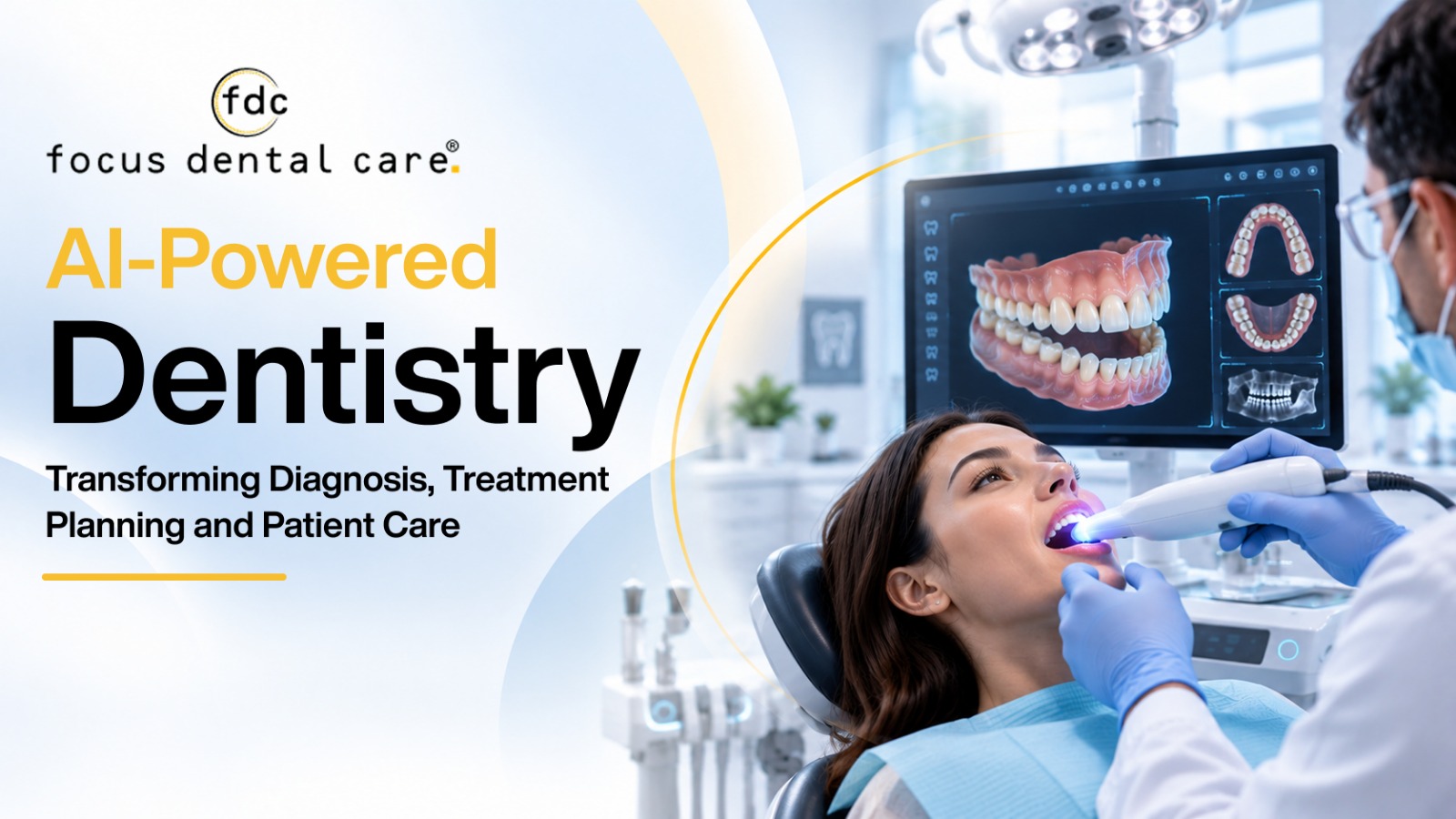
When people think about Artificial Intelligence, dentistry is probably not the first thing that comes to mind. Most people associate AI with smartphones, chat bots, and futuristic technology. But artificial intelligence is quietly becoming part of modern dental care too. From analysing dental images and supporting diagnosis to assisting with treatment planning and personalised care, AI is changing how dentists approach patient care.
But here is the important part. AI is not replacing the dentist. Instead, it is becoming another powerful tool that can help dentists analyse information, identify patterns, plan treatments, and provide patients with a more personalised experience.
So, what does AI-powered dentistry actually mean?
And how can it make a difference when you sit in a dental chair?
Understanding AI in Dentistry
In simple terms, Artificial Intelligence allows computer systems to analyse large amounts of information, identify patterns, and assist with tasks that traditionally require human interpretation. In dentistry, this can include analysing dental images, supporting diagnosis, assisting with treatment planning, monitoring changes over time, and helping clinicians make more informed decisions. Think about everything a dentist may need to consider during a complex case. X-rays, CBCT scans, digital impressions, photographs, bite relationships, gum health, existing restorations, tooth wear, dental history, and the patient’s treatment goals. AI can help organise and analyses some of this information, giving the dental team another layer of insight. But technology is only one part of the process. A computer can identify a pattern. A dentist understands what that pattern means for an individual patient. That clinical judgment remains essential.
AI in Dental Diagnostics and Digital Imaging
One of the most promising applications of AI in dentistry is diagnosis. Not every dental problem is obvious during a routine examination. Some cavities, bone changes, infections, or other abnormalities may be difficult to identify, particularly when they are small or located in areas that are difficult to visualise. AI-assisted systems can analyse dental images and highlight areas that may require closer examination. This does not mean that a computer looks at an X-ray and independently decides what treatment a patient needs. Instead, AI can act as an additional layer of information. The dentist can consider the AI analysis alongside clinical examination, symptoms, medical history, and other diagnostic findings before making a treatment decision. Modern digital imaging makes this even more useful. Digital X-rays, panoramic scans, CBCT, and intraoral scans provide detailed information about teeth, bone, roots, nerves, and surrounding structures. AI can help clinicians analyse this information more efficiently and identify patterns that deserve attention. For patients, this can contribute to a more detailed and structured diagnostic process.
AI in Dental Treatment Planning
Diagnosis is only the beginning. The next question is: “What is the right treatment for this patient?” This is where treatment planning becomes extremely important. A patient with missing teeth may have several possible treatment options. Someone with severely worn teeth may require a combination of restorative and preventive treatment. An orthodontic patient may need an entirely different approach. AI can support dentists by analysing patient-specific data and helping evaluate possible treatment approaches. Combined with digital dentistry, this can make treatment planning more visual and predictable. Digital scans can create detailed three-dimensional models of the patient’s teeth. These can then be used to plan orthodontic movements, restorations, implant placement, or smile changes before treatment begins. For patients, this can make an otherwise complicated treatment plan easier to understand. You can see what the dentist is analysing. You can understand what needs to be changed. And you can have a clearer conversation about your treatment options.
AI and Preventive Dentistry
One of the biggest possibilities with AI is a shift from treating dental problems to predicting and preventing them. Traditional dentistry is often reactive. A tooth hurts. A cavity is discovered. A restoration breaks. A patient comes to the dentist. But what if technology could help identify risk before a problem becomes serious? AI can analyse patterns in clinical information and may help identify patients who have a higher risk of certain dental conditions. When combined with regular dental examinations, this information could support earlier intervention and more personalised preventive care. The goal is to identify potential risks earlier. Instead of only asking, “How do we fix this problem?” modern dentistry can increasingly ask, “How can we prevent this problem from becoming worse?”
AI and the Patient Experience
AI is not only changing what happens inside the treatment room. It can also improve how patients understand and experience dental care. One of the biggest challenges in dentistry is communication. A dentist may understand exactly what is happening inside a patient’s mouth, but explaining complex dental problems in simple terms can sometimes be difficult. Digital imaging, treatment simulations, and AI-supported tools can make this information easier to visualise. Instead of simply being told that a tooth has a problem, patients can potentially see what the dentist is looking at. Instead of hearing a long explanation about orthodontic treatment, patients can see a digital representation of how their teeth may move. This can create a more collaborative conversation between the dentist and patient. AI can also support administrative processes such as appointment reminders, communication, and patient information. But technology should make healthcare more human, not less. Patients still want someone who listens to their concerns, answers their questions, and understands their expectations.
AI in Orthodontics and Smile Designing
Orthodontics is already heavily influenced by digital technology. Digital scans can capture the teeth in three dimensions, while software can simulate tooth movements and help clinicians plan a sequence of treatment. AI-assisted systems can further support analysis of tooth positions, movement patterns, and treatment data. Smile designing is also becoming increasingly digital. Modern smile design does not look at teeth in isolation. It considers the relationship between the teeth, gums, lips, facial proportions, and overall appearance. Digital tools can help patients visualise possible changes before treatment begins. But a beautiful smile is not simply a computer-generated image. The final treatment must also be biologically appropriate, functional, and suitable for the individual patient.
AI in Endodontics and Restorative Dentistry
AI and digital technology can also support complex treatments such as root canal therapy. Detailed imaging can help clinicians understand the anatomy of a tooth, identify areas requiring closer examination, and plan treatment more carefully, particularly in complicated cases. The same principle applies to prosthodontics and dental restorations. Digital impressions, CAD-CAM technology, and computer-assisted design can help create crowns, bridges, veneers, and other restorations with a high level of digital precision. The goal is not simply to replace a damaged or missing tooth. A restoration needs to fit properly, function comfortably, look natural, and work harmoniously with the surrounding teeth. Technology can support that process, while the dentist remains responsible for the clinical decisions.
Will AI Replace Dentists?
This is probably the question patients are most curious about. The answer is no. AI can analyse data quickly. It can recognise patterns and assist with imaging and treatment planning. A dentist has to understand the patient’s symptoms, dental history, expectations, concerns, lifestyle, and treatment priorities. Two patients can have similar X-rays and still require completely different treatment approaches. There is also a human element to dentistry that technology cannot replace. A patient may be anxious. Someone may have had a difficult dental experience. Another patient may priorities appearance, while someone else may be more concerned about comfort or treatment time.
The future of dentistry is therefore not AI versus dentists.
It is dentists using better technology to provide better-informed care.
AI-Powered Dentistry at Focus Dental Care Hyderabad, India
At Focus Dental Care, Hyderabad, modern dentistry combines advanced digital technology with detailed clinical evaluation and personalised treatment planning. With dental care centres in Gachibowli and Jubilee Hills, the clinic focuses on modern diagnostic and digital dentistry technologies to help clinicians understand each patient’s needs and develop treatment plans around their individual dental goals.
From digital imaging and treatment planning to orthodontics, smile designing, implants, restorations, and comprehensive dental rehabilitation, technology can play an important role in making treatment more precise and structured. But the technology is never the whole story. Every treatment plan begins with the patient. Their dental health. Their concerns. Their expectations. And their long-term goals. Because the future of dentistry is not about replacing the human side of healthcare with artificial intelligence. It is about combining the capabilities of technology with the experience, judgment, and empathy of a dental professional. AI may help us see more. It may help us plan better. It may help us identify problems earlier. Bringing AI-driven dental care for your entire family, with a focus on healthier, more personalized treatment and a dental experience you can trust.
