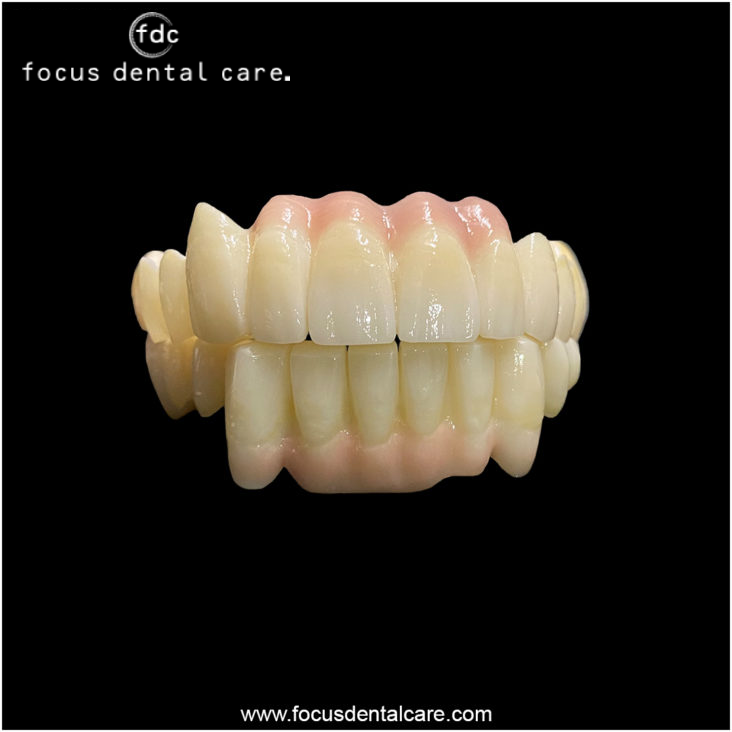

What are Dental Bridges?
- Dental bridges bridge the gap created by one or more missing teeth.
A typical dental bridge has:
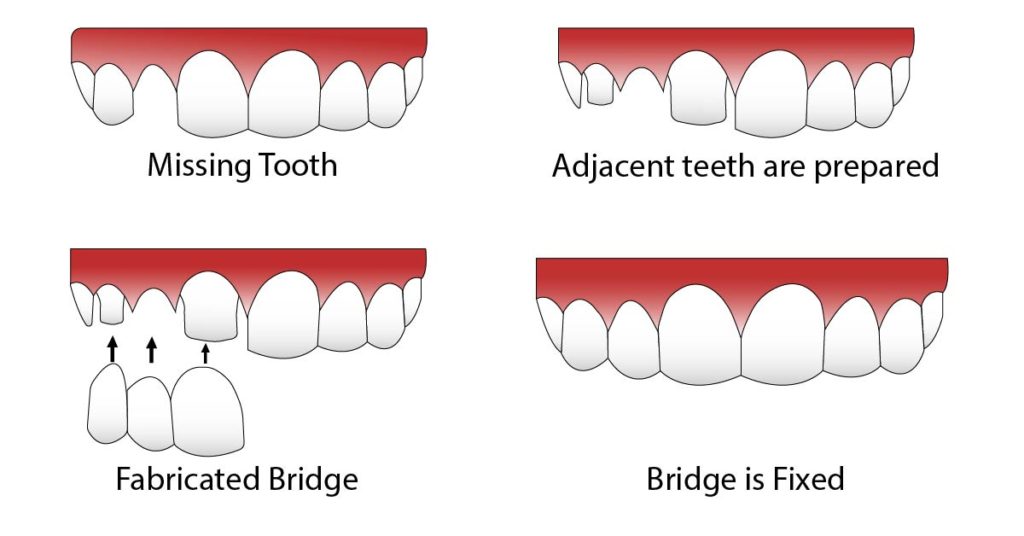
- Abutment teeth/Supporting teeth: A dental bridge has two crowns on the teeth, on either side of the gap (tooth missing). These anchoring teeth, or supporting teeth, can be your natural teeth or dental implants.
- Pontic: This is a false tooth that fills in the gap and attaches to the crowns.
Types of Dental Bridges
At Focus Dental Care, we provide various types of dental bridges that are:
- CEREC CAD-CAM bridges, which are fabricated and fixed in a single sitting.
- Metal-ceramic dental bridges.
- DMLS (DIRECT METAL LASER SINTERING) bridges.
- Zirconia bridges
PROCEDURE FOR GETTING A DENTAL BRIDGE
For Cerec Cad-Cam Bridge – (Single-Visit Dentistry)
- The first step is preparing the adjacent teeth for seating the bridge, and the selection of shade is made.
- A 3D scan of your mouth is taken.
- Milling of your dental bridge on-site.
- Your dentist fits the dental bridge, checks it, and makes any minor adjustments if required.
- Finally, the doctor will cement/fix it permanently in your mouth, where it will remain for many years and look exactly like any of your natural teeth.
For Other Dental Bridges
- In the first visit, your dentist prepares the abutment teeth/ adjacent teeth to be appropriate for the bridge to be placed.
- Impressions of the shaped teeth are then made and sent to a dental laboratory to construct the bridge.
- In your second visit, the dentist will check the fit of the dental bridge and is sent back to the laboratory for making necessary corrections.
- In the third and the final visit, the dentist will cement/fix the dental bridge permanently.
What are the benefits of a Dental Bridge?
- Dental bridges restore a natural look to your mouth/smile.
- Dental bridges restore the ability to speak normally, as missing teeth can impede proper pronunciation.
- Dental bridges maintain standard facial structure by preventing bone loss in the region where teeth are missing.
- Dental bridges restore the ability to chew food efficiently.
- Migration of teeth into adjacent spaces where teeth are missing leads to problems related to your bite. Dental bridges prevent adjacent teeth from moving into the space where the tooth/teeth are missing.